Kosh-Chenar
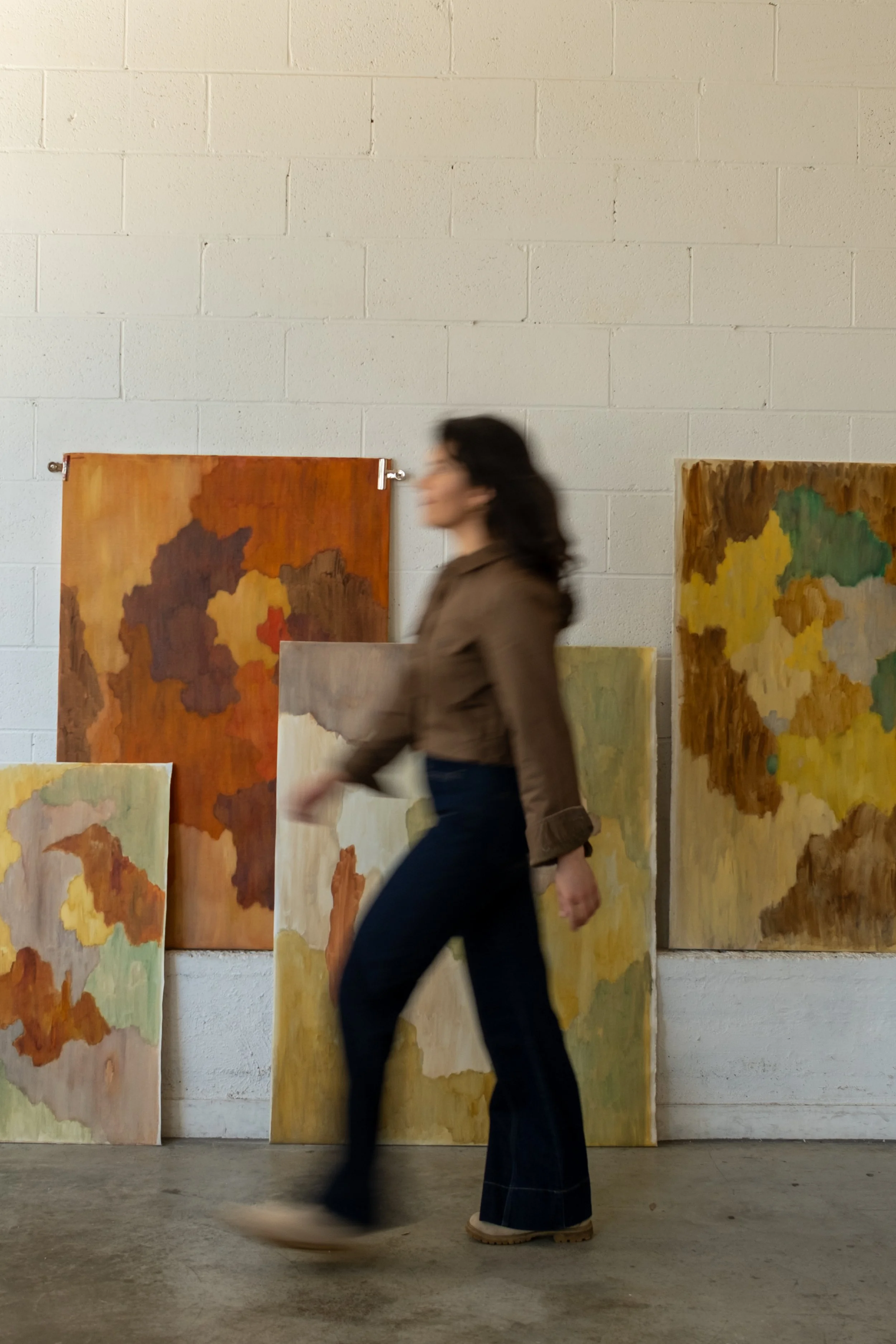
Kosh-Chenar is Uzbek for two plane trees growing side by side, a symbol of duality and shared roots. Which is one way of describing my whole life, really: raised in the Australian sun with Central Asia stitched into me, permanently between two places that both feel like home and neither of which fully explains me.
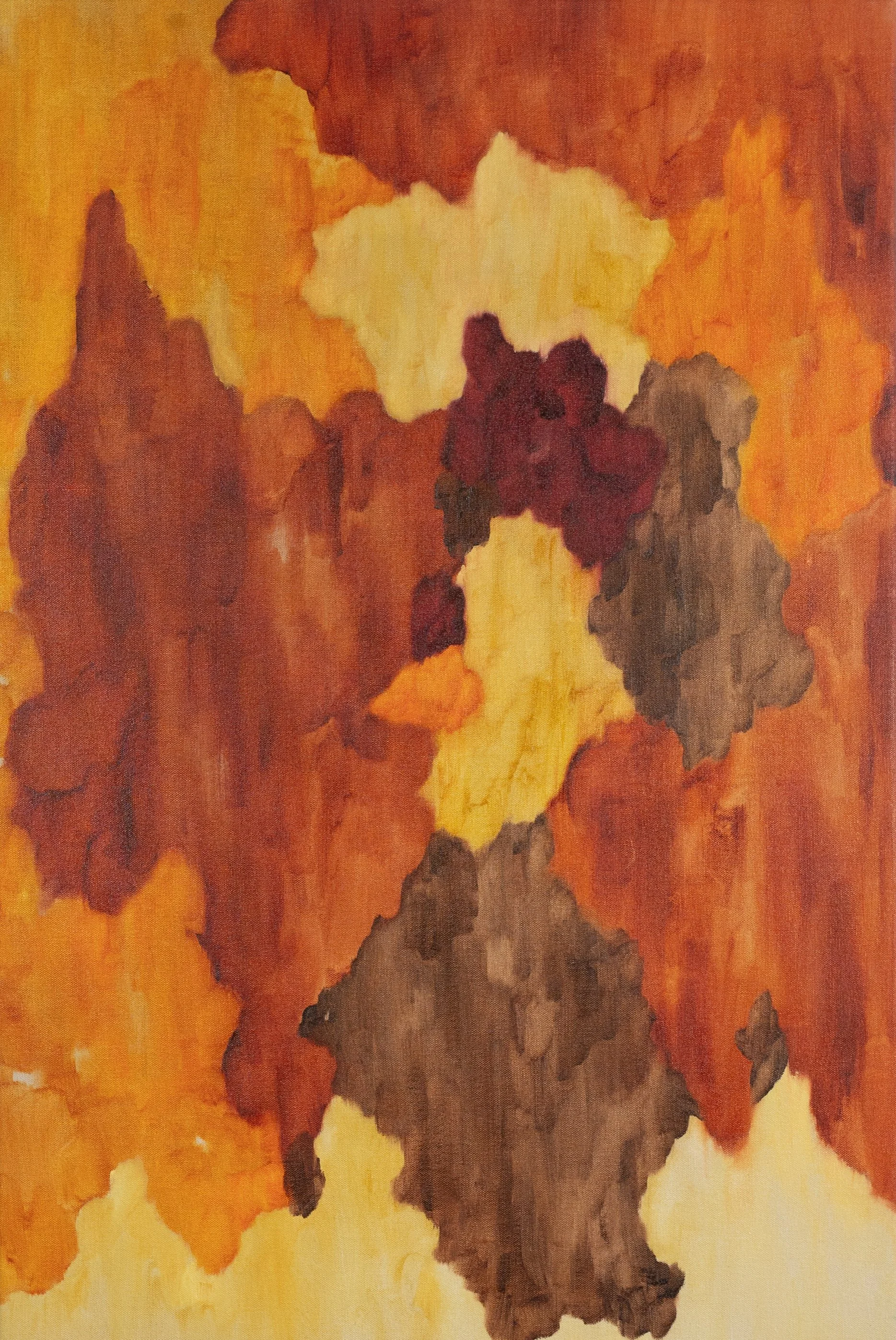
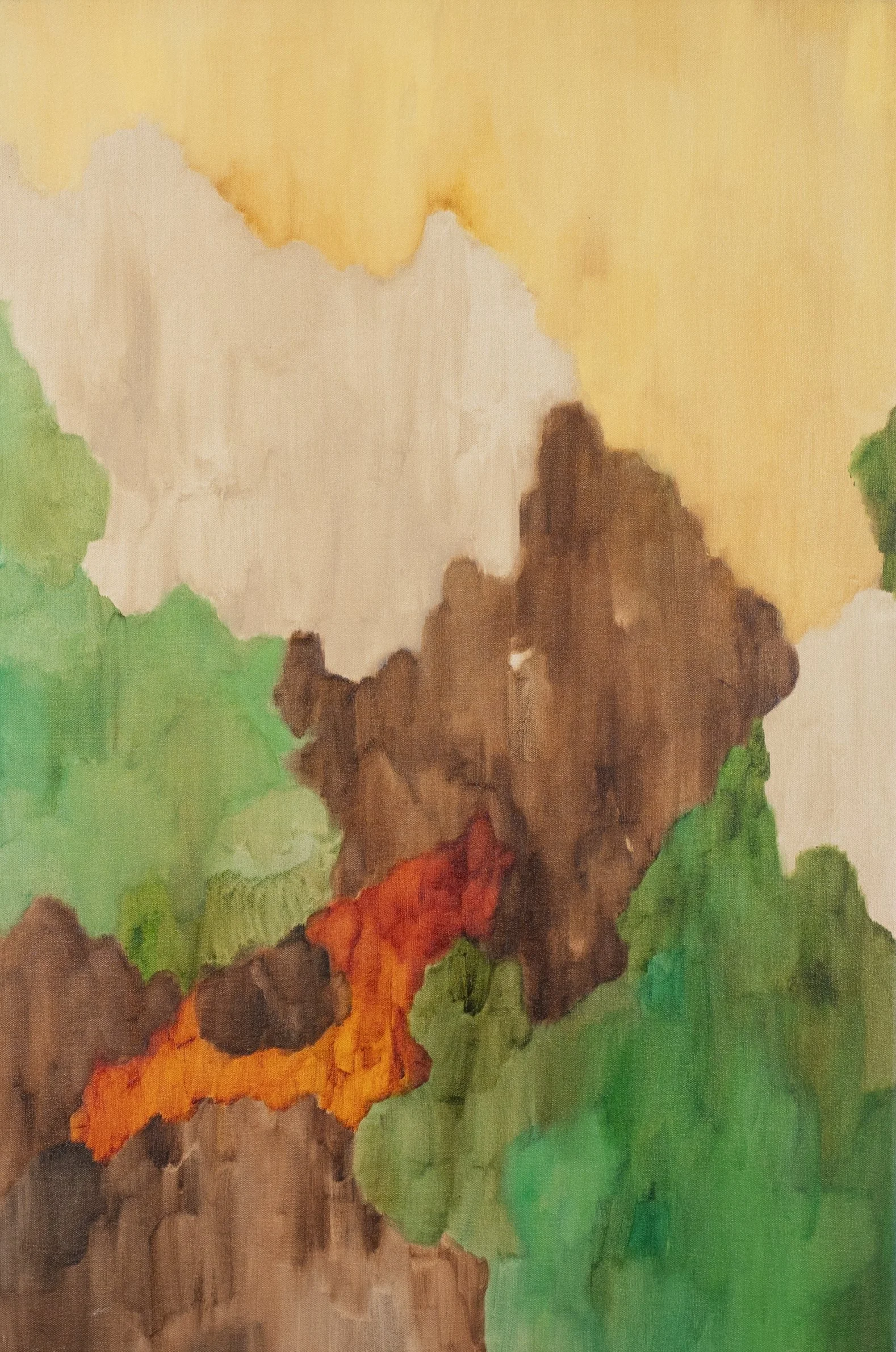
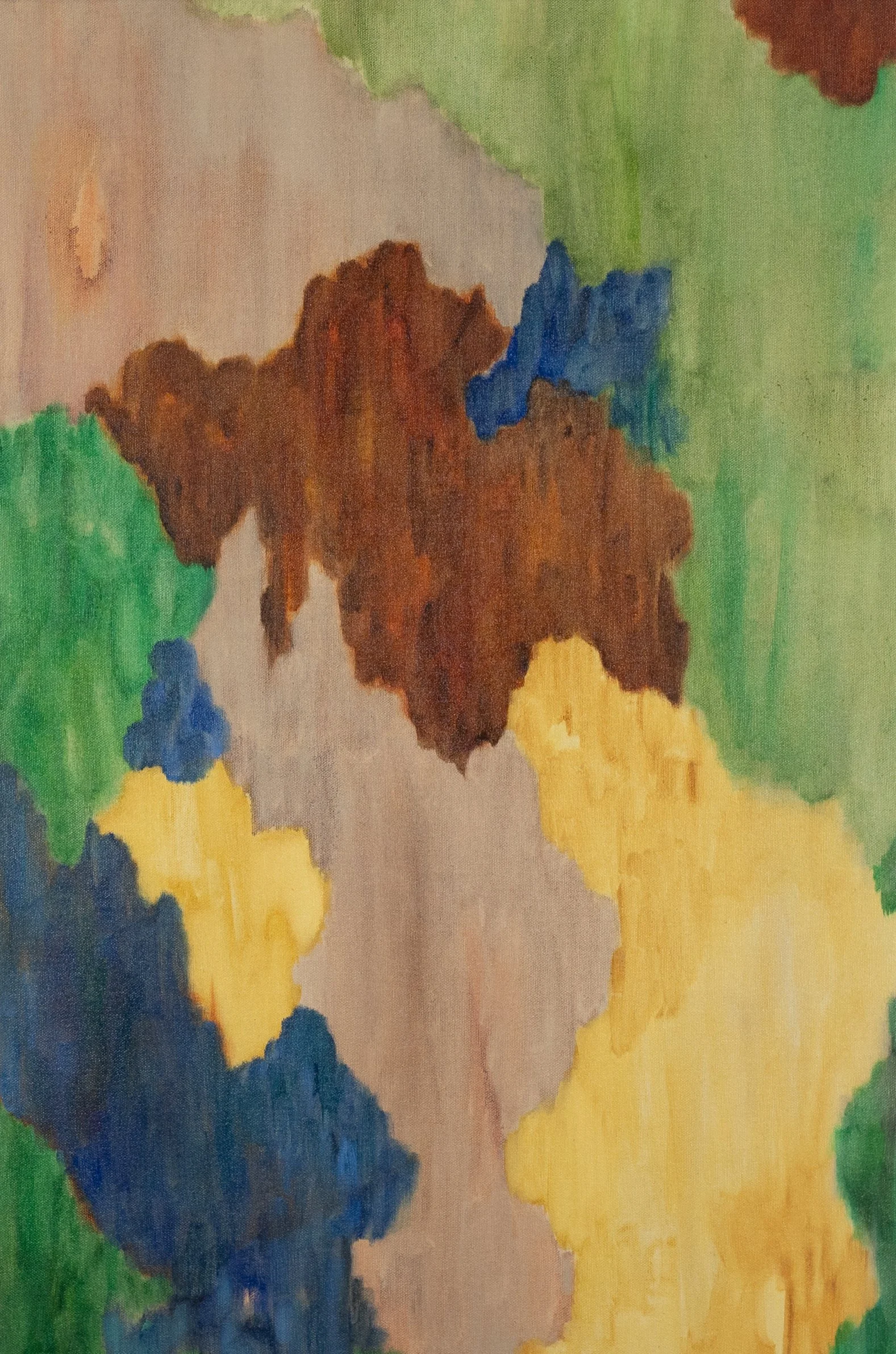
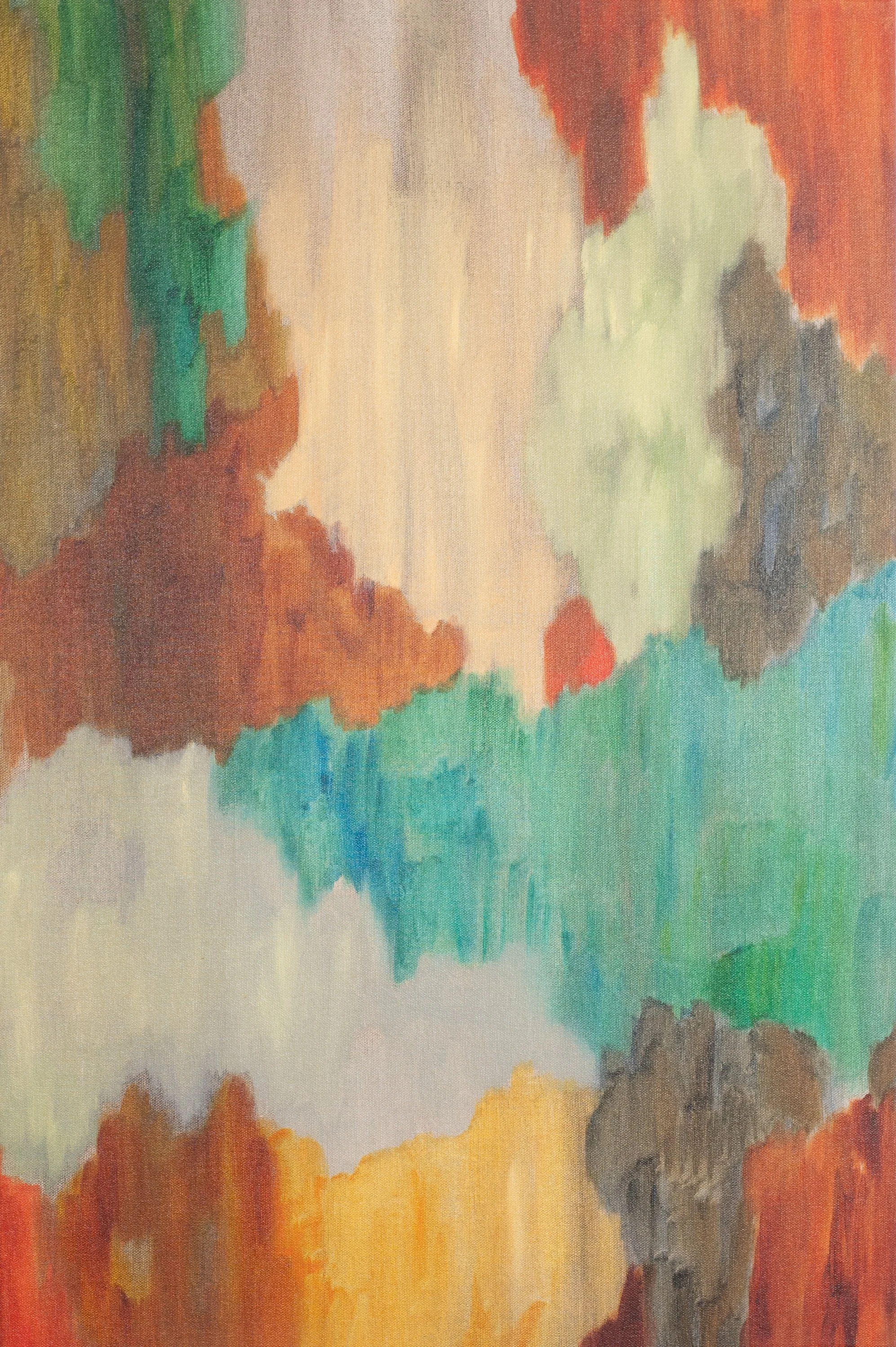
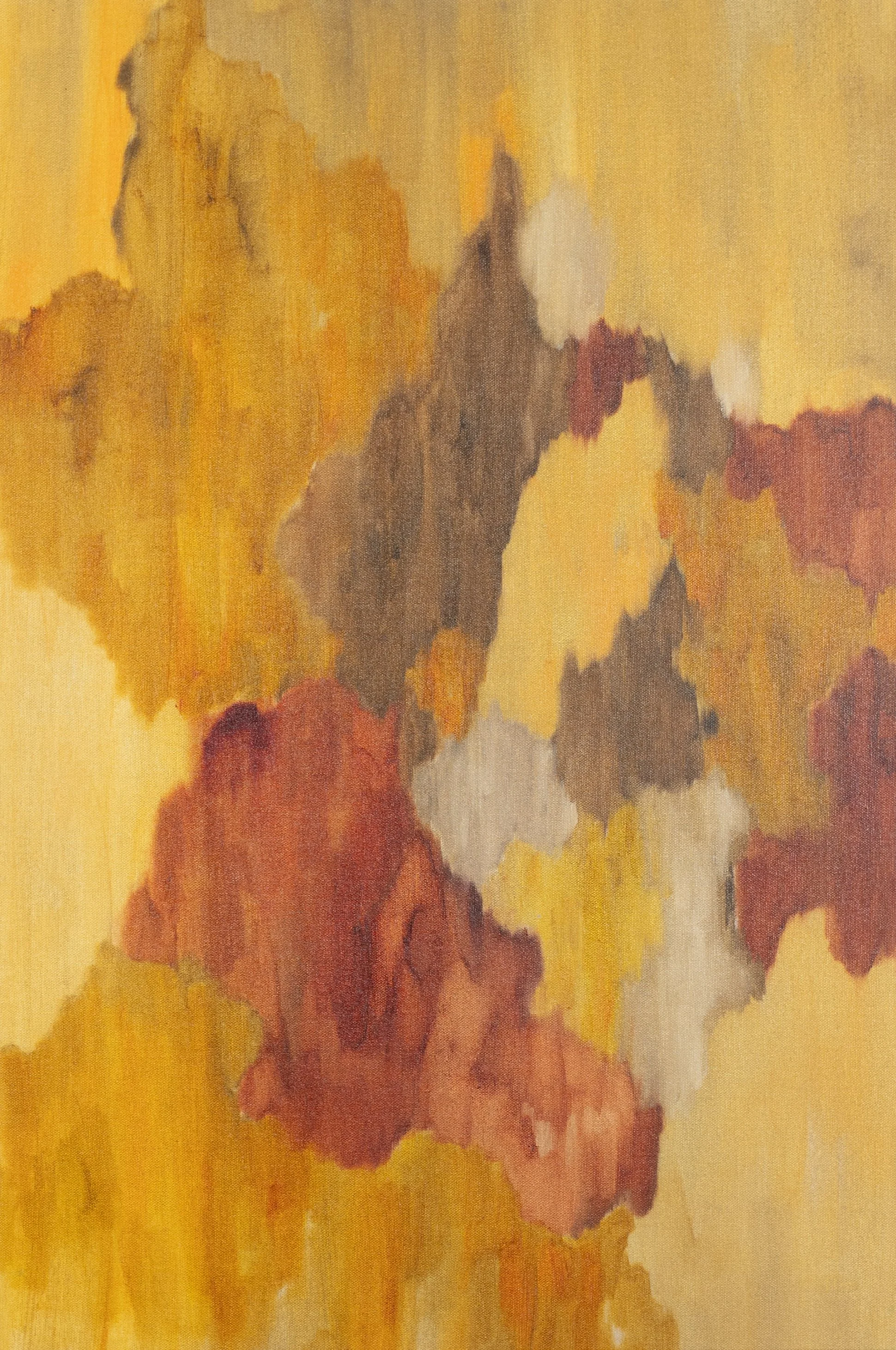
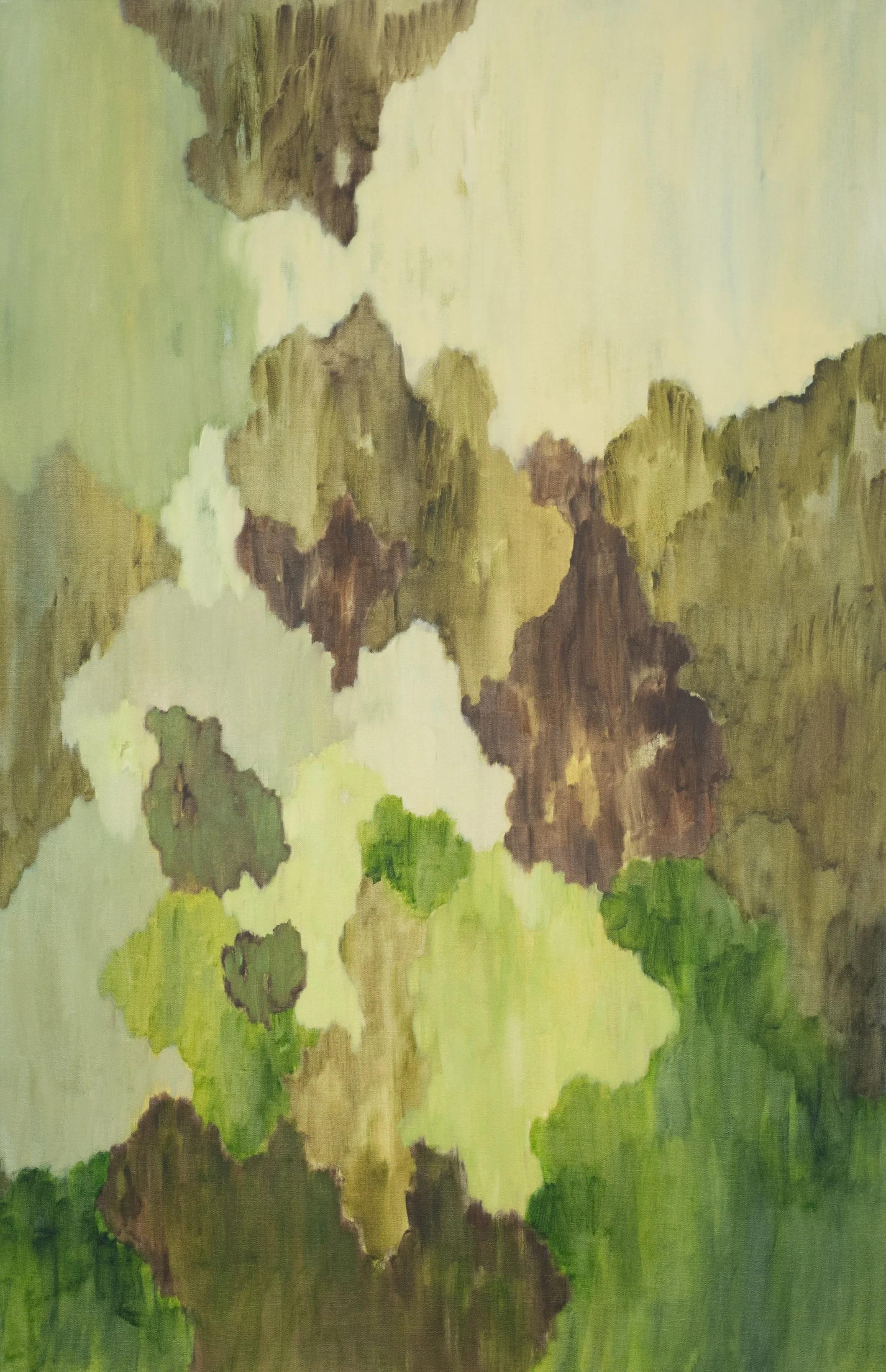
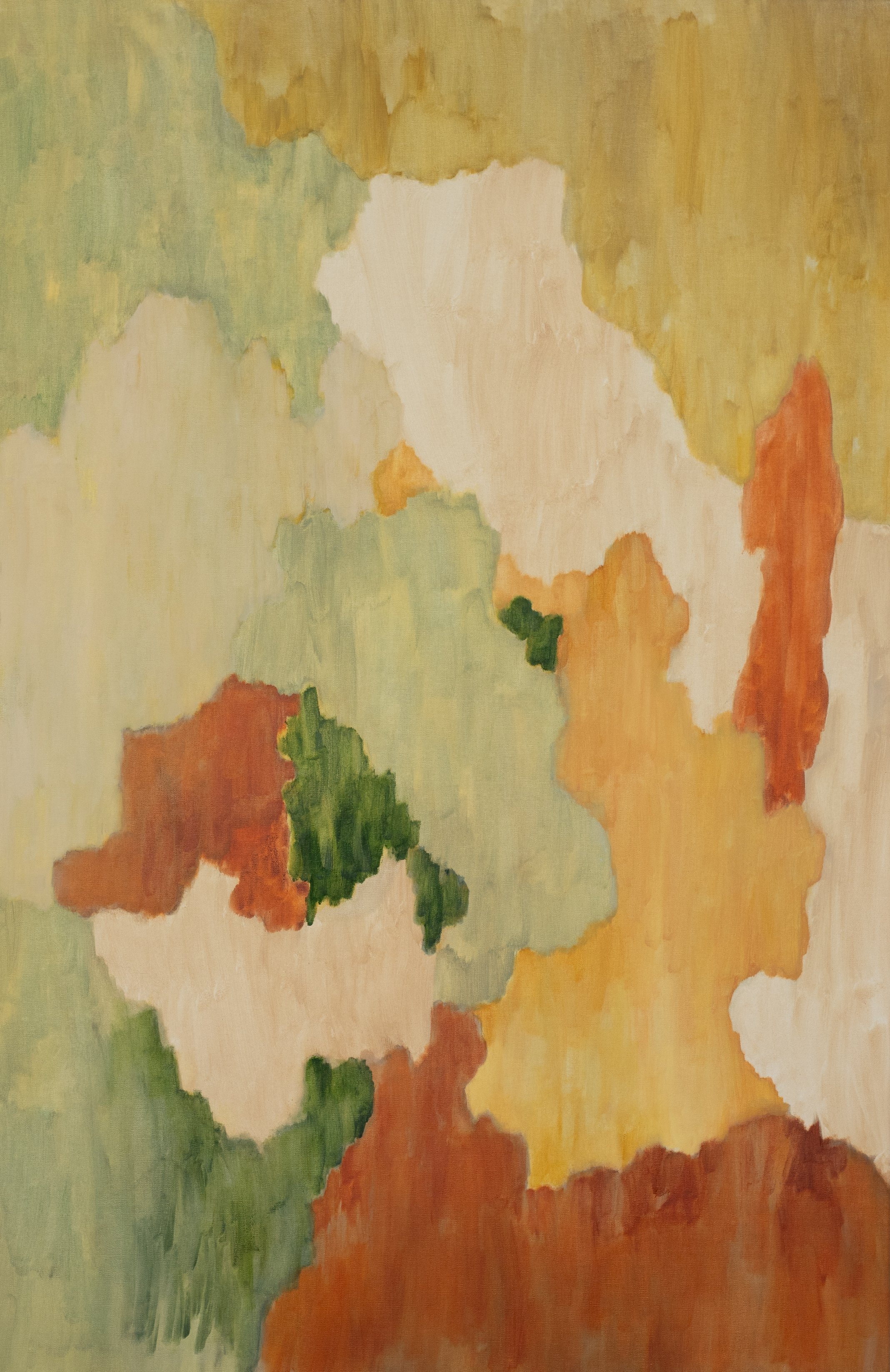
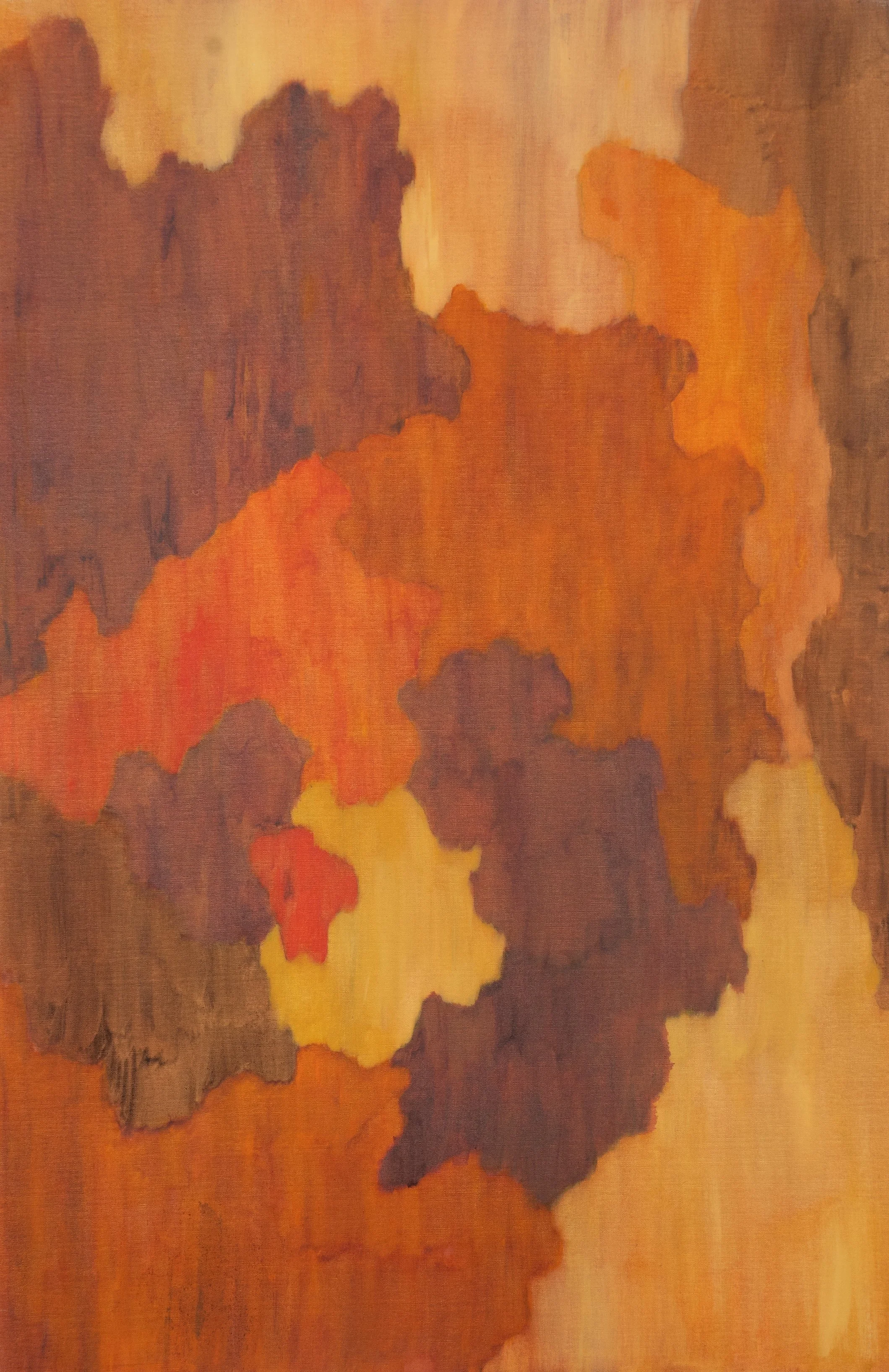
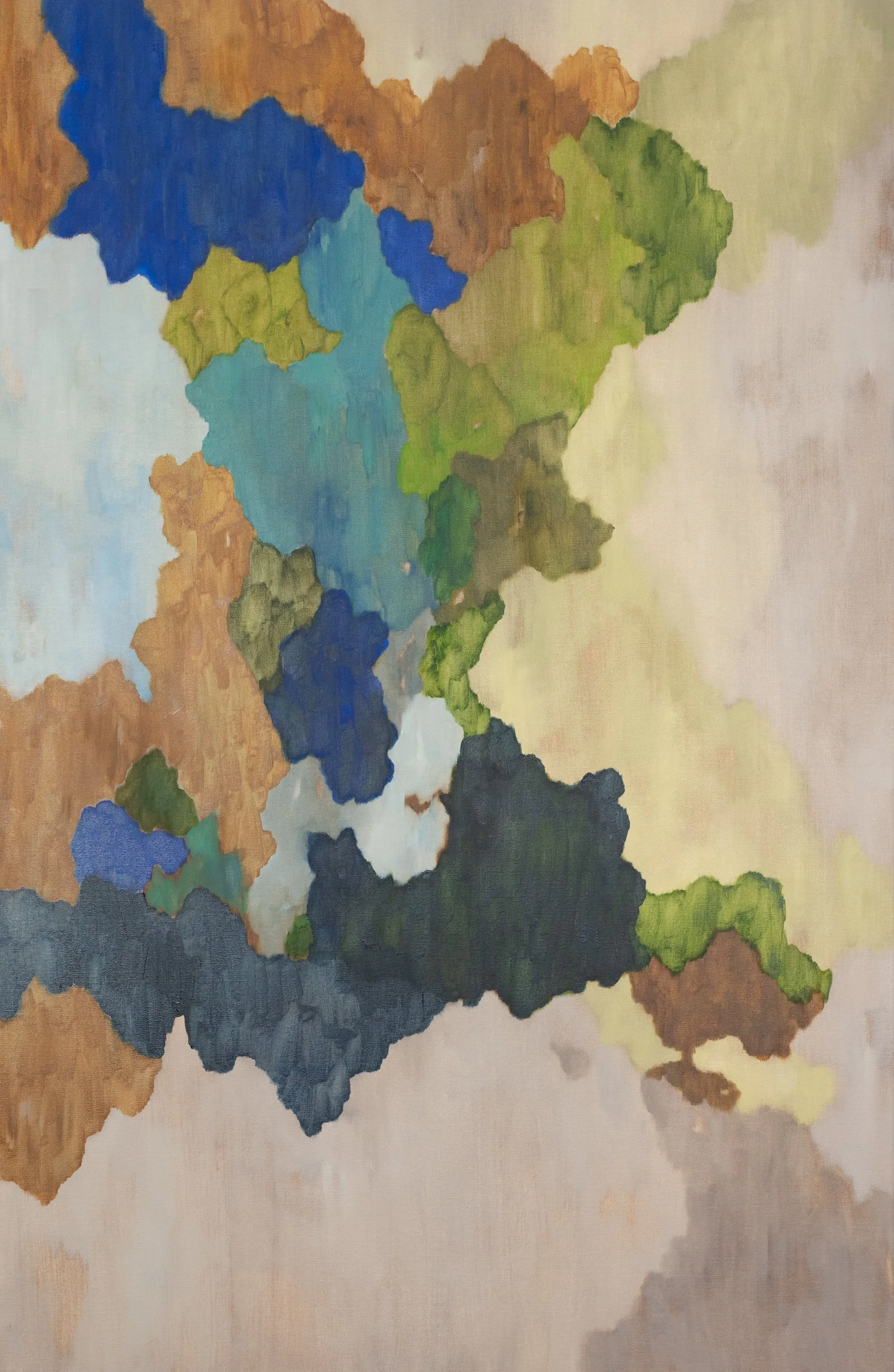
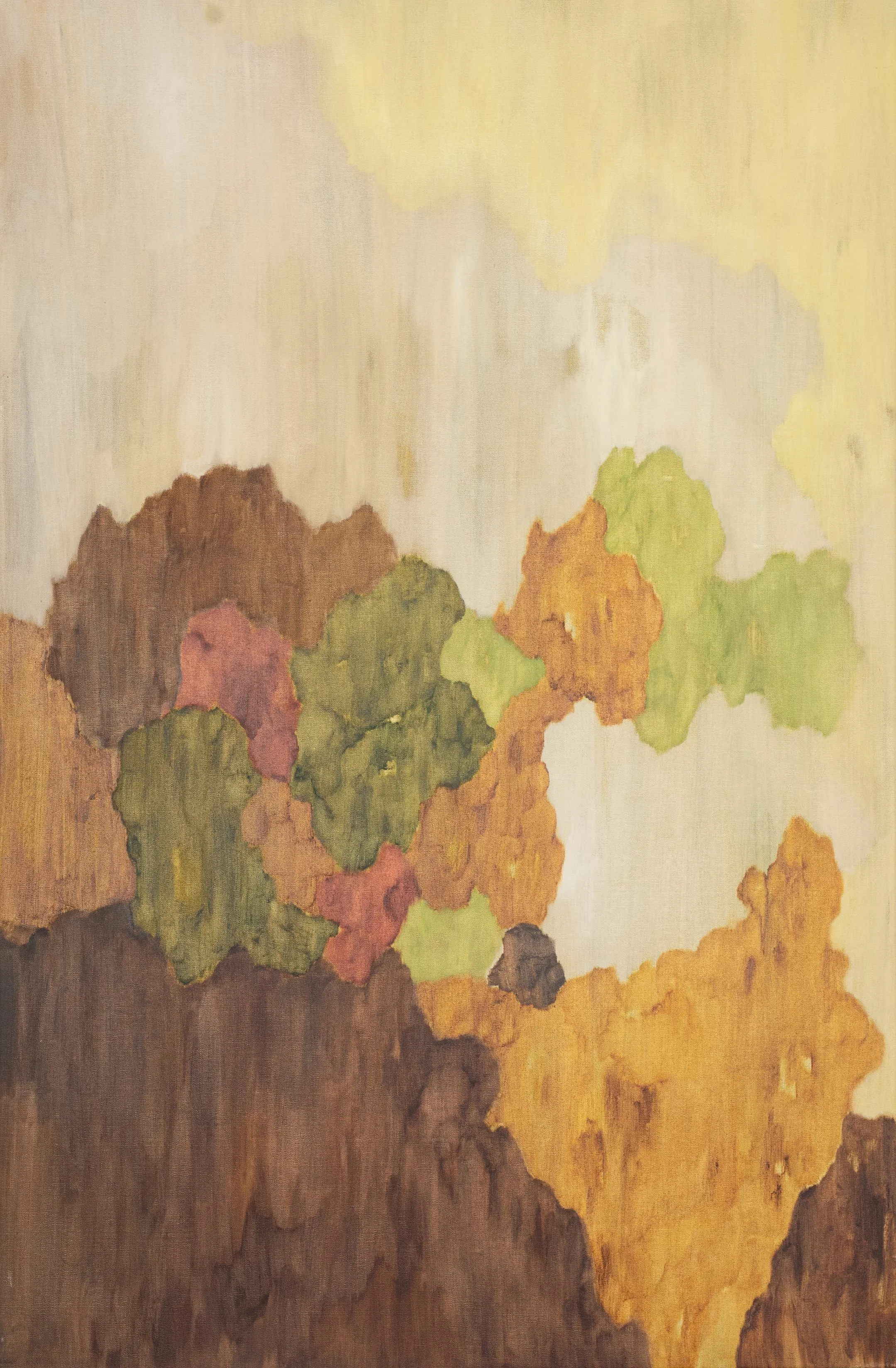
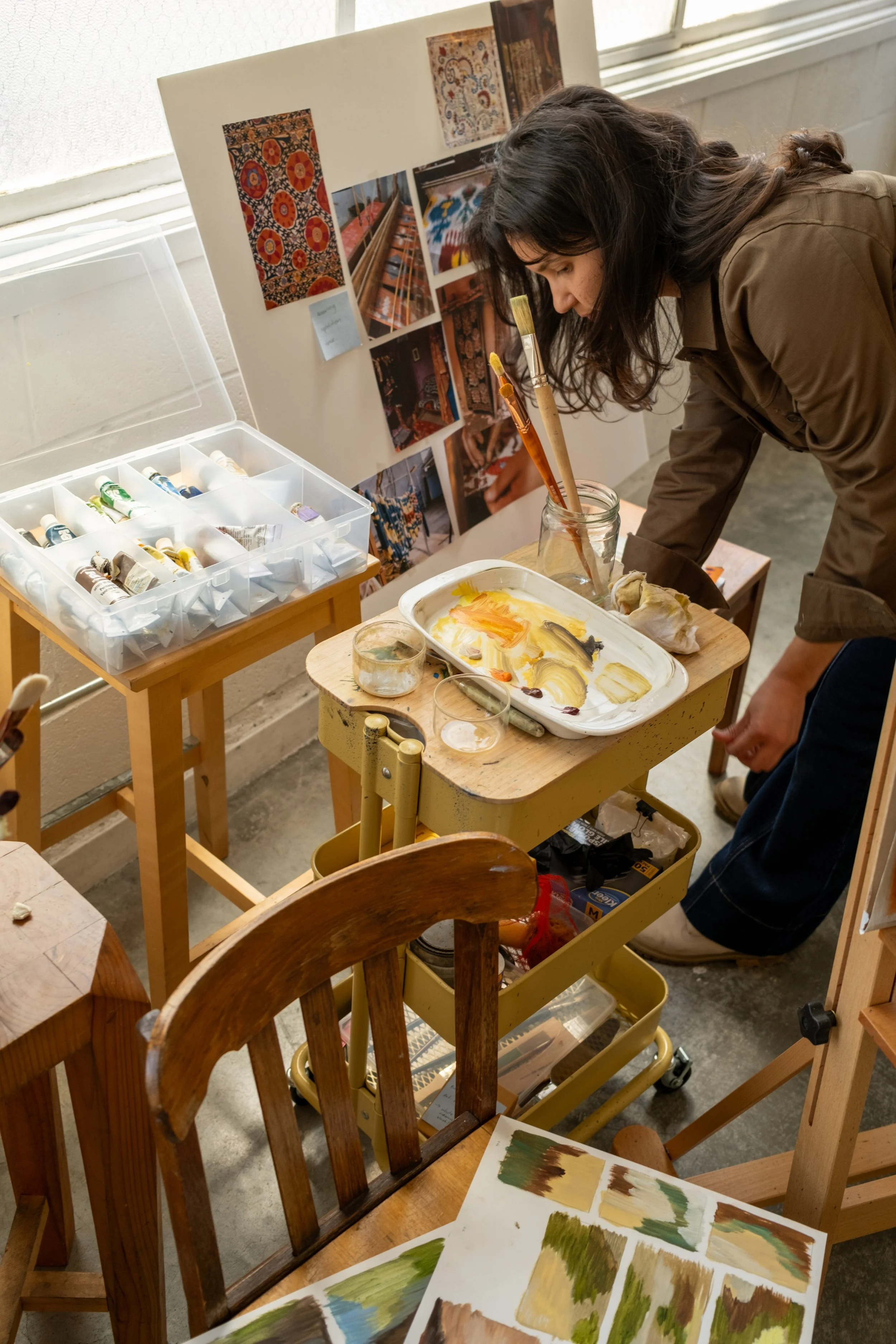
These are oil paintings, but they think like textiles. Uzbek ikat - with its softened edges, its wobbly repetitions, its colours that refuse to stay inside the lines - taught me how colour should behave long before any paintbrush did. So the work is built the way a weaving is: vertical strokes, layered and layered again, until the colours press up against each other like commuters.
You might see terrain in them. You won't find a location. They're internal maps, made of memory, inheritance, and the strange lifelong homework of figuring out who you are when you belong to two places at once. Growing up here meant constant translation: softening the differences, making yourself easy to read. That tension is in the palette, sun-bleached Australian tones sitting beside the deep, saturated colours of Central Asian silk, neither willing to blend nor leave. It turns out harmony is mostly just pressure, beautifully managed.
These paintings ask you to look slowly. They're in no hurry to resolve. Neither, I've learned, am I.
-
![Adjusted for taste]()
Adjusted for taste
Oil on canvas, 77 × 51 cm
-
![An oil abstract painting of a volcano erupting with orange lava flowing down its sides and smoke billowing into the sky, surrounded by greenery.]()
Learning to translate
Oil on canvas, 77 × 51 cm
-
![An abstract oil painting with various organic shapes and colors, including green, brown, blue, yellow, and beige.]()
Woven in
Oil on canvas, 77 × 51 cm
-
![]()
Inherited colour
Oil on canvas, 77 × 51 cm
-
![Abstract oil painting with warm tones of yellow, orange, red, brown, and beige blending into each other.]()
Dye bleeds differently
Oil on canvas, 77 × 51 cm
-
![Between Branches]()
Between Branches
Oil on canvas, 118 × 77 cm
-
![A colorful abstract painting featuring irregular patches of green, orange, yellow, and white colors.]()
Is this palatable?
Oil on canvas, 118 × 77 cm
-
![Abstract oil painting with warm hues of orange, yellow, and brown with organic shapes and textured appearance.]()
Too much spice?
Oil on canvas, 118 × 77 cm
-
![Abstract oil painting with irregular shapes in shades of blue, green, brown, black, and tan on textured paper.]()
Wandering Paths
Oil on canvas, 118 × 77 cm
-
![Abstract landscape painting featuring mountains, trees, and a sky with clouds.]()
White washes
Oil on canvas, 118 × 77 cm